
When King Taejo founded the Joseon Dynasty in 1392 and designated Seoul its new capital, he built the Jongmyo Royal Shrine (종묘) to honor his ancestors.
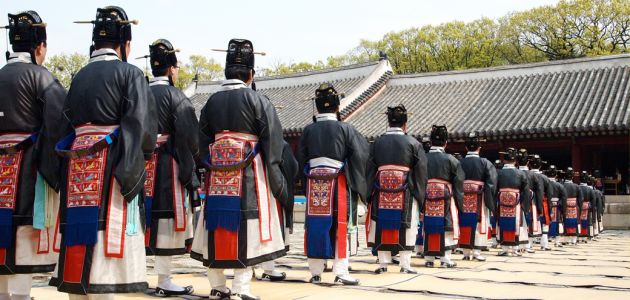
Six hundred years later, the Jongmyo Royal Shrine remains the world’s oldest and best-preserved royal Confucian sanctuary.
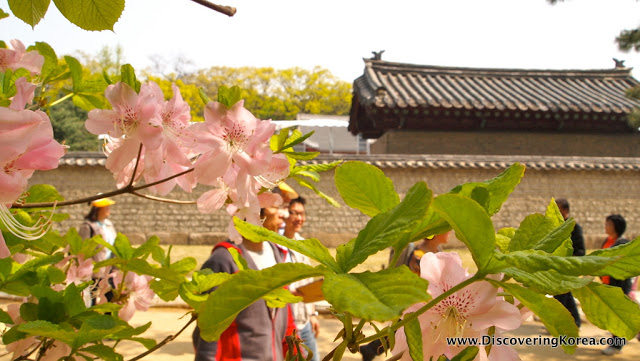
For residents and visitors to Seoul, the Jongmyo Royal Shrine is also one of the city’s most peaceful areas, thanks to the mature tree cover and the subdued elegance of the regal buildings.
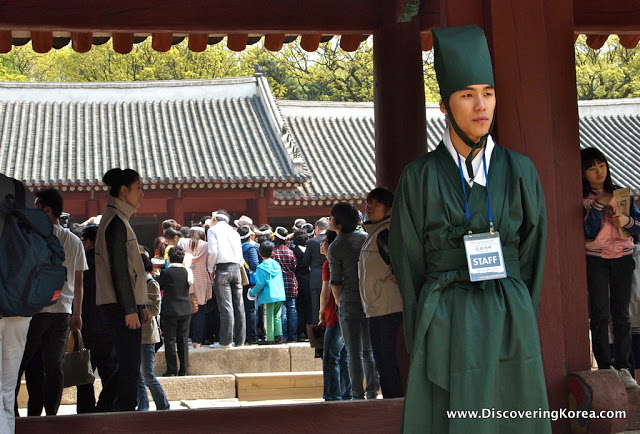
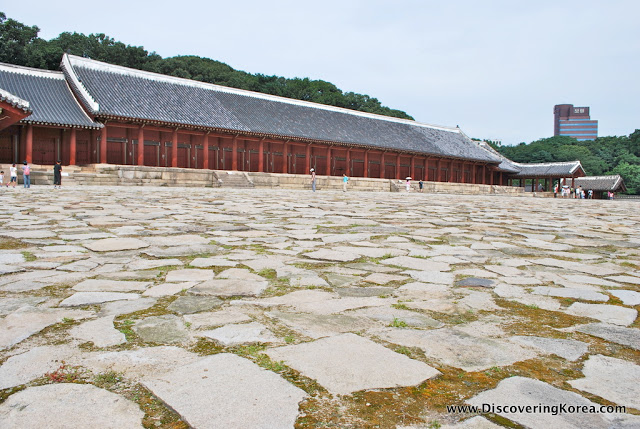
Of the two primary buildings, the Main Hall, or Jeongjeon (정전), is a remarkably long series of red wood chambers. With a floor area measuring 5,190 square meters, it is said to be the largest single wooden structure in the world.
Forty-nine mortuary tablets, including those of 19 Joseon Kings, from its first, Taejo, to its last, Sunjong, reside here.
To the northeast is Yeongnyeongjeon (영녕전), or the Shrine of Eternal Peace. Built in 1421 when space was no longer available inside the Main Hall, the 16 chambers contain 34 spirit tablets, including four of Taejo’s ancestors, posthumously designated monarchs and the kings and queens moved there from Jeongjeon.
Over five centuries, Taejo and subsequent monarchs performed neo-Confucian memorial rituals called Jongmyo Jerye (종묘제례) five times annually.
The ceremony was temporarily suspended during the turbulent years of colonization and war, but in 1969, descendants of the Jeonju Lee royal family reinstated the ritual and opened it to the public.
These days, the Jongmyo Daeje (종묘대제) or “great rite” is performed on the first Sunday in May.
Korea is the only country to have preserved its royal Confucian shrine and ancestral rites, which is why the royal rites were added to UNESCO’s list of Intangible Cultural Heritage in 2001.
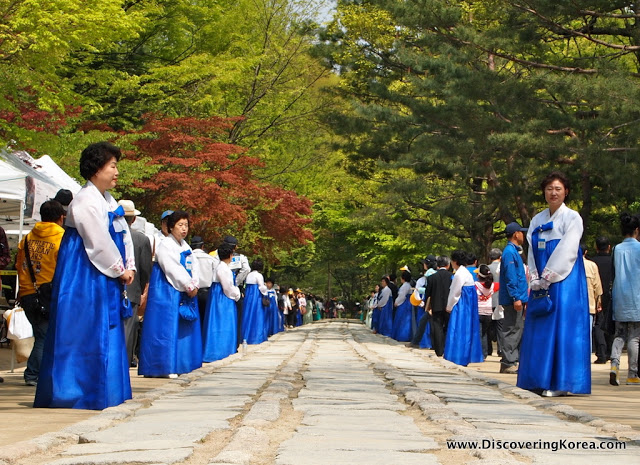
The solemn ceremony begins with a procession from Deoksugung palace (덕수궁) to Jongmyo. At the front gate, women dressed in royal blue hanbok politely ask visitors to remain off the stone processional pathway that leads to the shrine halls.
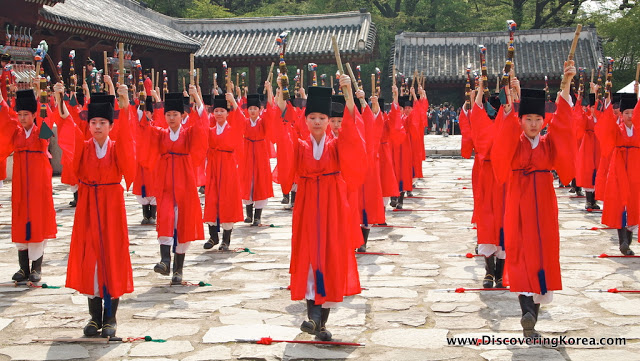
The six-hour Jongmyo Royal Shrine’s Great Rite can be described as 12 elaborate steps organized into three main parts – welcoming the arrival of the royal ancestral spirits, entertaining the spirits and finally, bidding farewell to them.
A precise protocol oversees the ceremonial recitations and presentation of special foods and wine from bronze water porters and wine casks.
A broad stone terrace in front of the shrine accommodates scores of musicians and attendants in full court dress who carefully perform the ritual.
Two lines of men wearing the barred coronet of upper terrace officials stand to the right, while 64 young women perform the Parilmu (팔일무), or Eight-Row Dance to the left.
The unique ceremonial music, called Jongmyo Jeryeak is performed by the Royal Court Orchestra.
Unlike small bits of traditional culture that are repackaged for the benefit of tourists, Jongmyo Daeje is a living treasure.
And watching the hundreds of people perform this powerful and sacred ritual annually, it’s no wonder that neo-Confucian ideas still hold considerable influence on Korean society.
For Your Information…
| Open: | First Sunday each May, 09:30-14:30 |
| Admission Price: | ₩1,000 for adults, 500 for children |
| Address: | Seoul Jongno-gu Waryong-dong 139 |
| Directions: | Jongno 3(sam)-ga Station (#130/#329/#534) on Lines 1, 3 & 5, Exit 8 |
| Phone: | 02-765-0195 |
| Website: | Official Site |

About Matt Kelley
Matt Kelly is native of the US Pacific Northwest and is half-Korean by ethnicity. He lived in Korea for five years and has written hundreds of travel guides for Wallpaper, TimeOut, the Boston Globe and Seoul Magazine and was a host for several different variety shows on Korean radio and television.