
After three and a half years living here, I’ve come to know Seoul fairly well, and yet when asked by travelers or other residents about what I’d put on a “short list” of must-see city sites, it can be difficult.
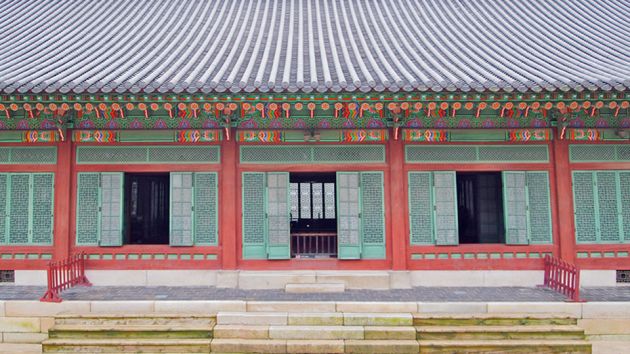
Frankly, personal preference varies considerably, and Seoul’s long history and sheer size combine for almost infinite possibilities. That said, I’ve found a helpful travel planner.
As the educational, scientific and cultural organization of the United Nations, UNESCO has created its own lists of the world’s most spectacular sites. South Korea appears 18 times on those lists, which is more than any other Asian country, relative to its size.
Among the nation’s inscribed treasures, six are located within the greater Seoul area.
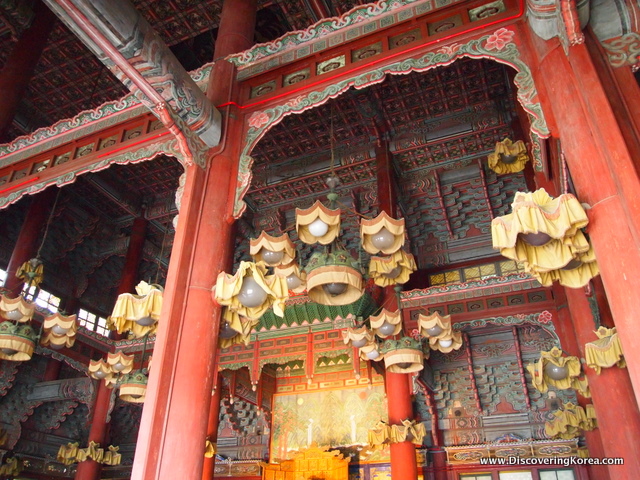
They include: Changdeokgung palace (창덕궁), Hwaseong Suwon Fortress (화성수원), the Jongmyo Royal Shrine (종묘) and ceremonial rites , and the Joseon Royal Tombs .
All have been remarkably preserved for centuries.
Perhaps the most popular is Changdeokgung Palace. Although nearby Gyeongbokgung (경복궁) is typically regarded as Seoul’s main palace from the Joseon Dynasty, it’s the eastern Changdeokgung Palace that’s usually considered the most beautiful.
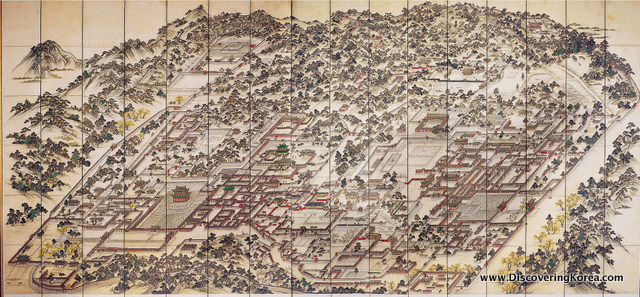
The “Palace of Prospering Virtue” was completed in 1412, and was home to 13 Korean kings over 270 years. And unlike Seoul’s other four palaces, Changdeokgung’s physical plant follows the area’s natural topography.
The effect is one of harmonizing with nature instead of dominating it.
An aesthetic legacy of the peninsula’s Three Kingdoms Era, Changdeokgung Palace won the praise of Korea’s most-admired king, Sejong the Great, who told his son, King Munjong, “Even though Gyeongbokgung is magnificent and splendid, the ideal place in this capital city is Changdeokgung.”
Despite succumbing to fire over the centuries, the palace’s reconstructions always respected the original design.
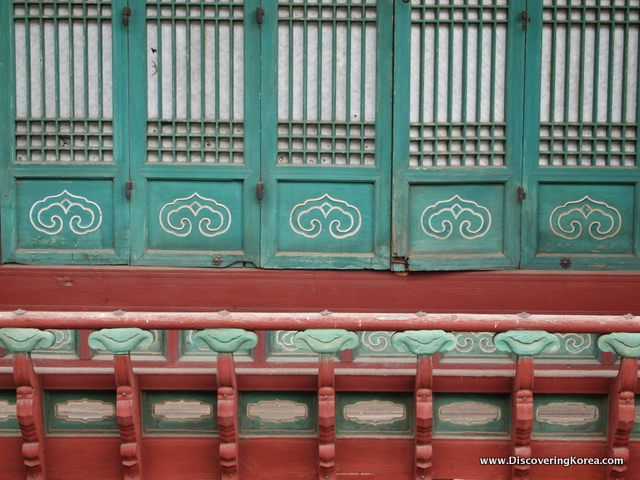
Today, 13 major buildings, which amount to about thirty percent of the original, are set among 110 densely wooded acres. Changdeokgung Palace‘s remarkable preservation and its unique co-existence with nature are why the palace was inscribed to UNESCO’s World Heritage List in 1997.
If you enter the palace from its grand southern gate, Donhwamun (돈화문), you’ll cross Seoul’s oldest stone bridge. Constructed in 1411, Geumcheongyo’s (금천교) graceful arches are decorated with mythical, fire-eating creatures called haetae.
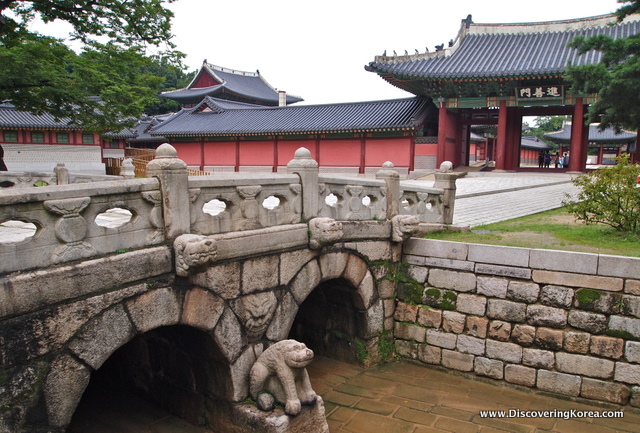
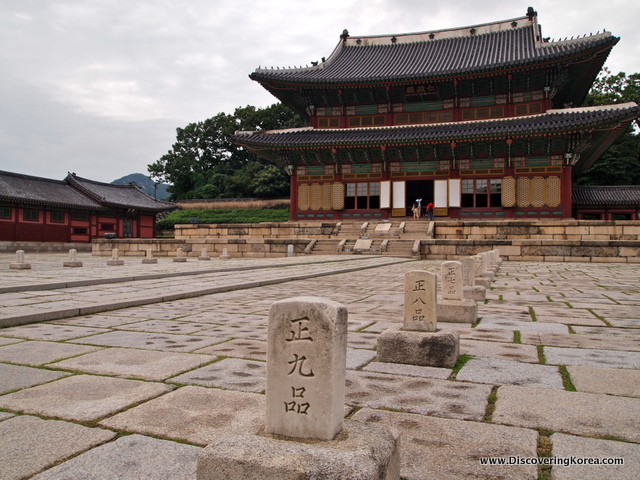
Beyond the bridge and gate, the palace is divided into four areas. The first surrounds the grand throne hall, Injeongjeon (인정전).
The second-largest wooden building in Korea, the interior design is a curious mix of east and west, with towering, painted ceilings, an ornate throne, electric chandeliers and Western-style curtains.
Delve further into the palace grounds and you’ll come upon the royal residence buildings. You can distinguish the king’s bedchamber from the queen’s by the former’s roof ridgeline that’s called yongmaru, or the dragon’s spine.
The dragon was the symbol of the king. On the palace’s eastern edge is a detached cluster of buildings called Sangnyangjeong and Nakseonjae (낙선재). The latter is where royal family members lived until 1989.
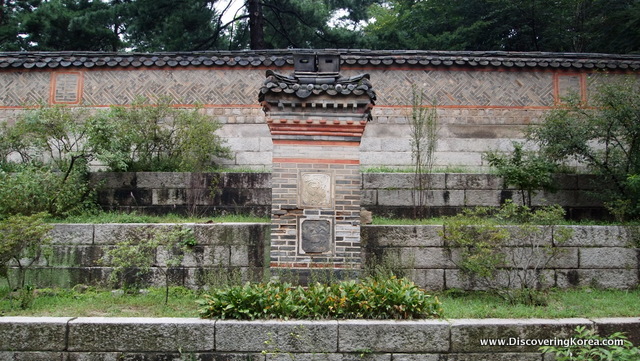
The vast majority of Changdeokgung Palace, however, is dedicated to Huwon (후원), a gorgeous 15th century garden of ponds and 28 pavilions that extends northwards onto Bugaksan mountain (북악산).
Although access to the garden is restricted, tours are provided daily in four languages and it’s a remarkable sight year-round.
So the next time you’re putting together a Seoul travel itinerary for yourself or someone else, I’d say that Seoul’s UNESCO treasures are a great place to start.
For Your Information
| Open: | Dec-Feb: 09:00-17:00, Apr-Oct: 09:00-18:30, Nov & Mar: 09:00-17:30, English Tours: 11:30, 14:30 |
| Admission Price: | ₩3,000 (adults), ₩1,500 (children), Secret Garden: ₩5,000 (adults), ₩2,500 (children) |
| Address: | Seoul Jongno-gu Waryong-dong |
| Directions: | Jongno 3(sam)-ga Station (#130/#329/#534) on Lines 1, 3 & 5, Exit 6 |
| Phone: | 02-762-8261, 9513 |
| Website: | Official Site |

About Matt Kelley
Matt Kelly is native of the US Pacific Northwest and is half-Korean by ethnicity. He lived in Korea for five years and has written hundreds of travel guides for Wallpaper, TimeOut, the Boston Globe and Seoul Magazine and was a host for several different variety shows on Korean radio and television.