
Tea was first cultivated in China over 2,500 years ago. But shortly thereafter, green tea was introduced to Korea, and the country has a long history of producing excellent tea.
The earliest mention of tea in Korea dates to the 7th century and Queen Seondeok (선덕여왕) of the Silla Kingdom. And two hundred years later, tea seeds from China were planted at the foot of Jirisan mountain (지리산) near the village of Hadong.
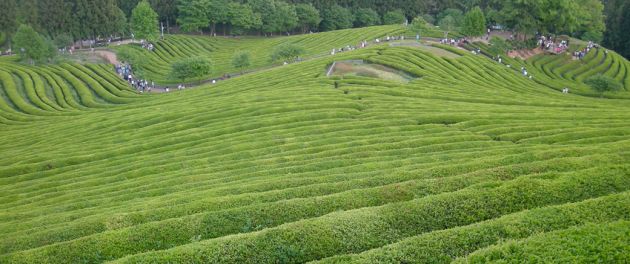
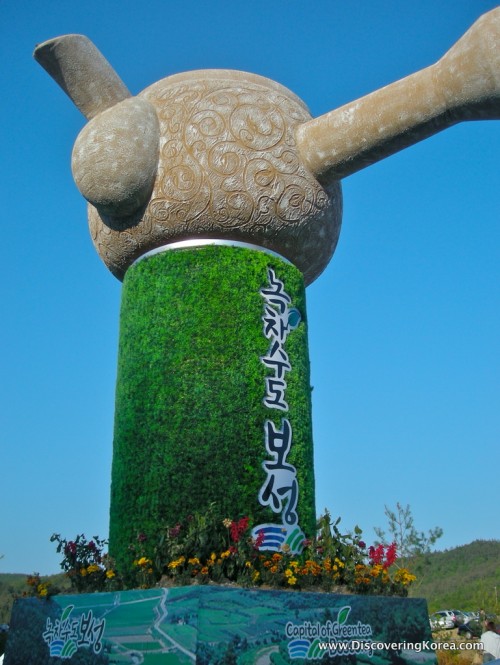
Today, Korea’s rolling hills of green tea in Boseong are among the its most famous. In fact, some say that Boseong is Korea’s tea growing capital.
Among the fields of green tea in Boseong, the largest and most famous is the Daehan Green Tea Plantation (보성녹차밭 대한다원).
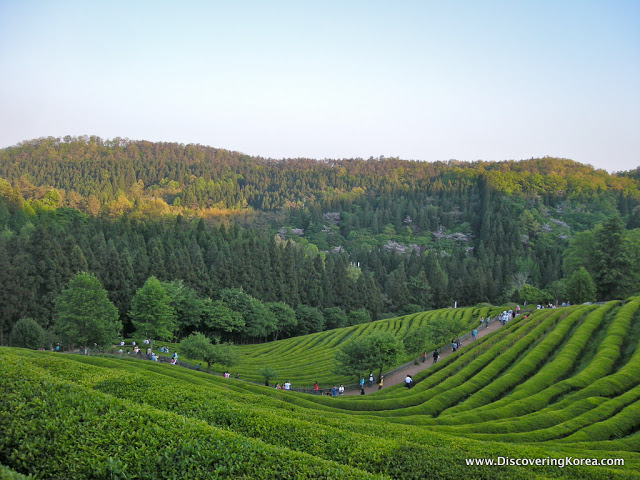
Originally planted during the Japanese occupation of Korea, the Daehan plantation was purchased by Korean entrepreneurs in 1957 and transformed into a major tourist destination. Today, Boseong’s tea plantations account for 40% of Korea’s total green tea production.
Although the best time to pick green tea in Boseong is usually around mid-April, the fields are gorgeous to view throughout the spring, summer and fall.
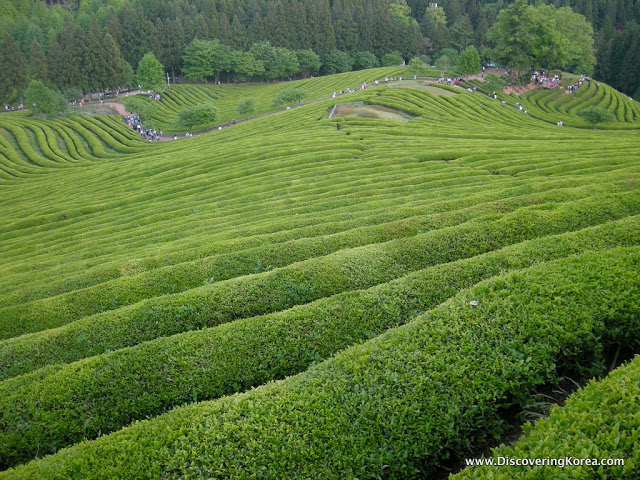
My friend and I arrived at the plantation shortly before sunset, and the spicy scent of un-harvested tea met us long before we saw any fields. But after walking up a path lined by tall cedars we were greeted by a stunning sight.
In the 14th century, tea’s close association with Buddhism caused it to fall out of favor during Korea’s Confucian-influenced Joseon Dynasty. But even during this era, some Koreans still enjoyed tea and wild tea plants continued to thrive on the foothills of Jirisan mountain.
In recent history, the Korean way of tea has resurfaced, and today there are three famous green tea producing areas in Korea: Hadong, Jeju Island and Boseong. Among them, the green tea in Boseong is considered the best.
Boseong tea is known as yubi-cha, and is prized for its superior taste and scent. At the base of Hwangseongsan mountain (황성산) there are about 20 green tea fields that cover several hundred kilometers.
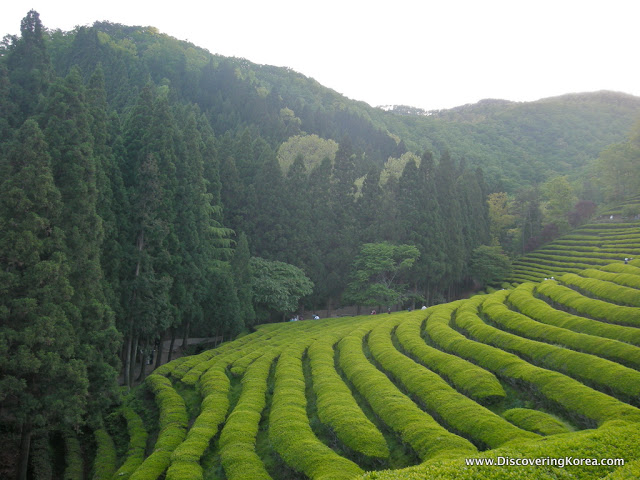
Among the audible oohs and ahs of the visitors around us, we looked up at the verdant hill covered in winding rows of tea hedges. Rising some 350 meters at a steep incline, the rows of green tea in Boseong are covered in stripes of neatly trimmed tea plants.
As we climbed farther up into the fields, special viewing areas provided even more spectacular sights. If we had arrived in the morning, chances are we could have had the added treat of seeing the tea rows blanketed in fog.
I read (but unfortunately didn’t visit) the Botjae Tea Plantation, which is just another five minutes up the road from Daehan, and offers views of tea fields all the way to the South Sea. Another nearby place worth visiting is the historic town of Beolgyo.
After about an hour of wandering among the winding rows of green tea in Boseong, my friend and I decided to enjoy some green tea cuisine at a restaurant located near the plantation’s entrance.
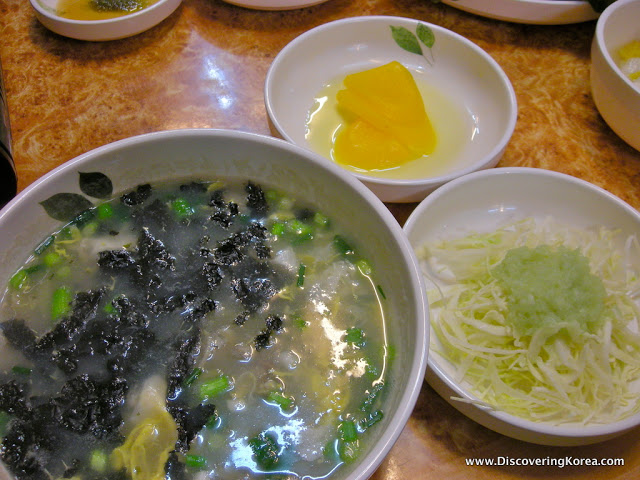
Since we are well aware of green tea’s positive impact on physical and mental well-being, we enjoyed green tea ddeok-guk (떡국), or rice cake soup, slices of grilled pork called samgyeopsal (삼겹살) that was sprinkled with green tea power, and some delicious green tea ice cream for dessert.
Since it was already late, my friend and I decided to spend the night in Boseong. Thankfully, there are several hotels and guesthouses.
After a good night’s rest, we looked forward to visiting the Yulpo Seashore early the next morning. At 6 am, the Yulpo Haesu Nogchatang, which pumps seawater from 120 meters below ground level, opens.
What makes this spa unique is that the seawater is mixed with green tea. It sounded like a great way to start the day.
But don’t take my word for it! Each spring, nearby Hadong county hosts an annual green tea festival.
Closer to Seoul, check out the world tea festival at the COEX center, usually held in June. Or, visit the Panyaro Green Tea Institute in Seoul’s Insa-dong (인사동) neighborhood, open year round.
For Your Information…
| Open: | 09:00-19:00 (Mar-Oct); until 18:00 (Nov-Feb) |
| Admission Price: | 2,000 (adults); 1,000 (children & youth; |
| Address: | South Jeolla Province Boseong-gun Boseong-eup Nokcha-ro 763-43 |
| Directions: | From Seoul Central City Bus Terminal, take an express bus to Gwangju. From Gwangju, take an intercity bus to Boseong. From Boseong, take a local bus bound for Yulpo and get off at Daehan Dawon. |
| Phone: | 061-852-2593 |
| Website: | Official Site |

About Matt Kelley
Matt Kelly is native of the US Pacific Northwest and is half-Korean by ethnicity. He lived in Korea for five years and has written hundreds of travel guides for Wallpaper, TimeOut, the Boston Globe and Seoul Magazine and was a host for several different variety shows on Korean radio and television.